How Do I Calculate Bread Usage or Cost Per Serving for My Menu? Here's What Foodservice Operators Should Know
Learn how to measure bread usage, calculate cost per serving, and make smarter purchasing decisions for restaurants, markets, and foodservice operations. This guide also explains how the right bread supplier can help improve consistency and control costs.
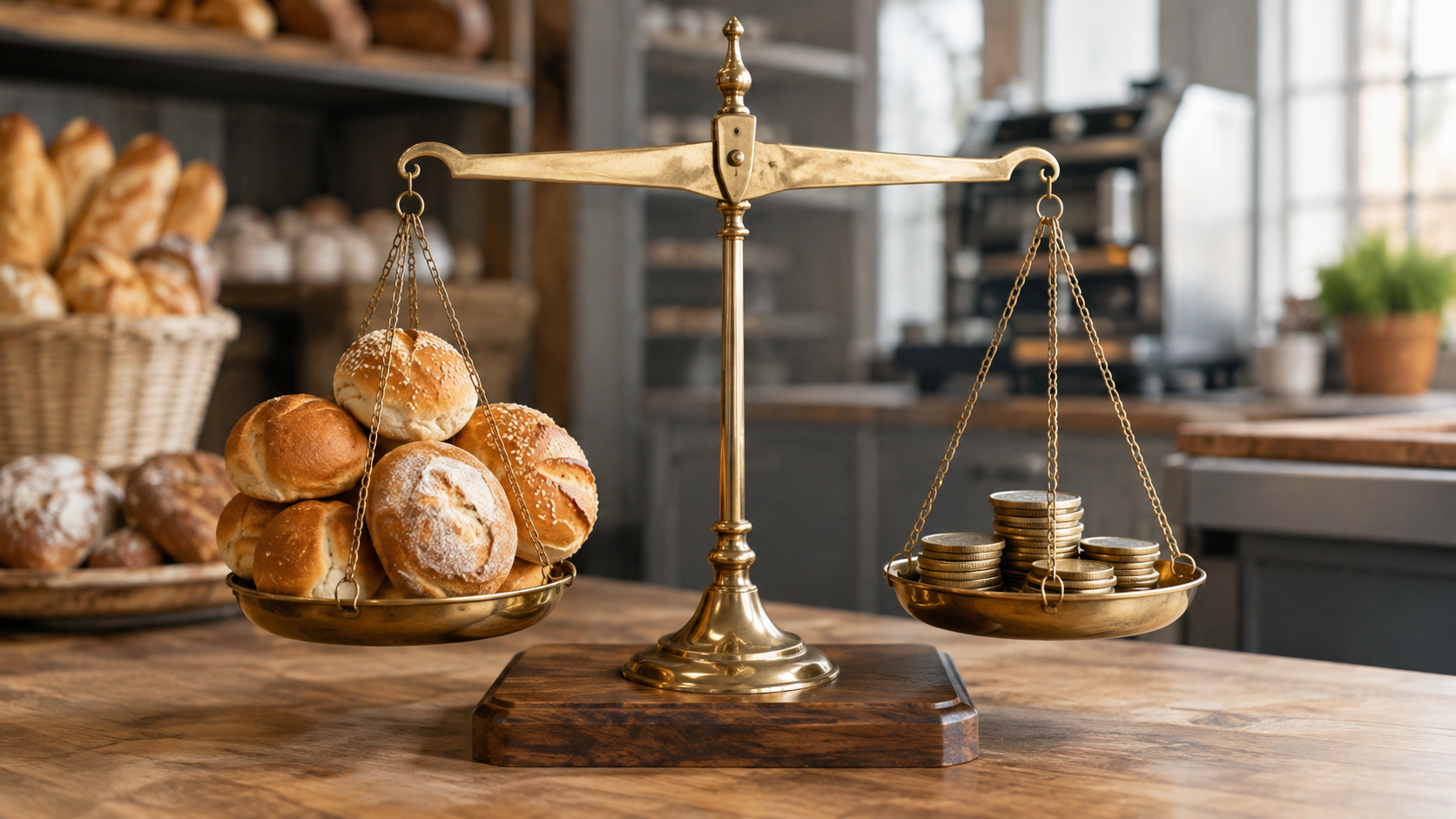
To calculate bread cost per serving, divide the total cost of the bread used by the number of servings it produces, then account for waste, portion size, and preparation. Tracking actual usage over time gives restaurants and foodservice operators a more accurate picture of bread costs and helps identify opportunities to reduce waste.
Bread is an important menu component for restaurants, markets, and other foodservice operations. Whether you serve sandwich bread, rolls, artisan loaves, or hearth-baked bread, understanding your usage and cost per serving can make food costs easier to manage.
A simple calculation can provide a useful starting point, but accurate menu costing requires more than looking at the price printed on an invoice. Portion sizes, yield, waste, and menu applications all affect the true cost of serving bread.
Why Calculate Bread Cost Per Serving?
Knowing your bread cost per serving helps you understand how much each menu item actually costs to produce.
For example, a restaurant might purchase a case of rolls for $48. If that case contains 96 usable rolls, the bread cost is:
$48 ÷ 96 = $0.50 per roll
If one roll is used for each sandwich, the bread component of that sandwich costs $0.50.
This information can be incorporated into overall recipe and menu costing.
Accurate bread costing can help foodservice operators:
- Set appropriate menu prices
- Monitor food costs
- Compare suppliers and products
- Identify excessive waste
- Standardize portions
- Forecast purchasing needs
- Evaluate different bread formats
- Improve consistency across locations or shifts
How Do You Calculate Bread Usage?
Bread usage measures how much bread your operation consumes during a specific period.
A basic formula is:
Beginning inventory + purchases - ending inventory = bread used
For example:
- Beginning inventory: 10 cases
- Purchases: 40 cases
- Ending inventory: 8 cases
Your operation used:
10 + 40 - 8 = 42 cases
You can then convert cases into individual units, loaves, rolls, slices, or portions depending on the product.
Track Usage by Menu Application
It can also help to separate usage by application.
For example:
- Sandwiches: 600 rolls
- Burgers: 400 rolls
- Breakfast service: 250 slices
- Bread baskets: 150 loaves
- Catering: 100 specialty loaves
This approach makes it easier to see where your bread inventory is going and identify unusually high usage.
How Do You Calculate Bread Cost Per Serving?
Once you know how much bread you use, calculating cost per serving is straightforward.
Bread cost per serving = total bread cost ÷ number of servings
Suppose you purchase 120 sandwich rolls for $72.
$72 ÷ 120 = $0.60 per roll
If each customer receives one roll, your bread cost is $0.60 per serving.
If a menu item uses half a roll, the bread cost would be:
$0.60 ÷ 2 = $0.30 per serving
The same basic method can be applied to sliced bread, buns, rolls, and other portioned bakery products.
What About Bread Waste?
Waste can significantly change your actual bread cost.
Bread may be discarded because of:
- Overproduction
- Damage during storage or preparation
- Stale products
- Incorrect orders
- Portioning errors
- Unsold prepared items
- Changes in customer demand
For that reason, your theoretical cost may be lower than your actual cost.
If you purchase $500 worth of bread but $40 worth is regularly discarded, your effective usable bread cost is closer to $460 for the products that actually reach customers.
Tracking waste alongside purchases and usage gives you a more realistic view of your food costs.
How Can Restaurants Improve Bread Cost Control?
Better cost control does not necessarily mean choosing the least expensive bread. Product quality, consistency, shelf life, portion size, and customer expectations all matter.
Consider these practices:
Standardize Portions
Establish how much bread each menu item receives. A sandwich might use one roll, two slices, or a specific portion of an artisan loaf.
Consistent portions make menu costing more predictable.
Monitor Inventory
Regular inventory counts can reveal unexpected changes in usage. Compare actual consumption against the number of meals or menu items sold.
If your restaurant sells 500 sandwiches but uses enough bread for 575 sandwiches, investigate the difference.
Track Waste
Record how much bread is discarded and why. Even simple daily or weekly tracking can reveal patterns.
Consider Yield
A loaf may produce a certain number of usable slices, but trimming, breakage, or inconsistent slicing can reduce the actual yield.
Use your usable yield, rather than the theoretical yield, when calculating cost per serving.
Review Purchasing Patterns
Ordering too much bread can increase waste, while ordering too little can create shortages and affect menu availability.
Purchasing should reflect actual demand as closely as practical.
How Does Bread Selection Affect Menu Costs?
The price of bread is only one part of the equation.
A higher-quality product may have characteristics that affect its overall value, including:
- Consistent size and weight
- Reliable portion yield
- Texture and structure
- Shelf life
- Appearance
- Flavor
- Customer appeal
- Performance in specific menu applications
For restaurants and foodservice operations, consistency is particularly important. A bread product that performs predictably can make portioning, preparation, and costing easier.
Choosing Bread for Different Foodservice Applications
Different menus may require different bread products.
Sandwiches
Sandwich operations may benefit from consistent sandwich breads, rolls, or specialty breads that provide dependable portion sizes and structure.
Burgers and Hot Sandwiches
Rolls and buns need to hold their shape while supporting fillings, sauces, and other ingredients.
Bread Service
Restaurants offering bread baskets may prefer hearth-baked or artisan products that provide a distinctive presentation and eating experience.
Catering and Foodservice
Large-volume operations may prioritize consistency, availability, packaging, and products that can be incorporated efficiently into established preparation systems.
Working With a Bakery Supplier
A reliable bakery supplier can be an important part of managing bread costs and maintaining product consistency.
Superior Baking Co produces a wide range of baked goods for retail customers and wholesale clients, including restaurants, markets, and foodservice establishments.
Its product range includes:
- Hearth-baked breads
- Rolls
- Sandwich breads
- Artisan breads
- Specialty loaves
For foodservice operators, working with a bakery experienced in wholesale production can help simplify purchasing while providing access to products designed for different menu applications.
Superior Baking Co combines premium ingredients with more than a century of baking expertise.
Serving Foodservice Customers Across the Region
Superior Baking Co serves customers in and around major markets throughout the Northeast, including:
- New York City, New York
- Philadelphia, Pennsylvania
- Boston, Massachusetts
- Newark, New Jersey
- Jersey City, New Jersey
- Pittsburgh, Pennsylvania
- Buffalo, New York
- Yonkers, New York
- Rochester, New York
- Worcester, Massachusetts
For restaurants, markets, and foodservice establishments in these areas, evaluating bread usage and cost per serving can be a useful first step toward improving purchasing and menu-cost management.
A Simple Bread Costing Checklist
Use this process to calculate your bread cost more accurately:
- Determine your purchase price.
- Record the number of loaves, rolls, or units received.
- Determine the usable yield.
- Establish the standard portion for each menu item.
- Calculate the cost of each portion.
- Track actual daily or weekly usage.
- Record discarded or wasted product.
- Compare expected usage with actual usage.
- Adjust purchasing based on demand and waste patterns.
Conclusion
Calculating bread usage and cost per serving gives restaurants and foodservice operators a clearer understanding of one of their recurring food costs. By tracking purchases, inventory, portions, yield, and waste, you can build more accurate menu costs and make better purchasing decisions.
The right bakery partner can also make a difference by providing consistent products that fit your menu and operational needs. Superior Baking Co offers hearth-baked breads, rolls, sandwich breads, artisan breads, and specialty loaves for retail and wholesale customers throughout the region.
Ready to Discuss Your Bread Needs?
Contact Superior Baking Co at (508) 586-6601 to discuss bread products for your restaurant, market, or foodservice operation.
Frequently Asked Questions
How do I calculate the cost of one slice of bread?
Divide the cost of the loaf by the number of usable slices it produces. For example, if a $6 loaf produces 24 usable slices, each slice costs $0.25.
How do I calculate bread usage for a restaurant?
Add beginning inventory and purchases, then subtract ending inventory. The result represents the amount of bread used during the measurement period.
Should bread waste be included in food cost calculations?
Yes. Waste can increase your actual cost per usable serving. Tracking discarded bread helps you understand the difference between theoretical and actual food costs.
How can I reduce bread waste?
Start by standardizing portions, monitoring inventory, matching purchases to demand, and recording the reasons bread is discarded. Consistent products and predictable ordering can also help.
Can a bakery supply different types of bread for foodservice?
Yes. Wholesale bakeries can provide products designed for different applications, including sandwich breads, rolls, hearth-baked breads, artisan breads, and specialty loaves.